Gazzaley and Rosen offer practical strategies, backed by science, to fight distraction. We can change our brains with meditation, video games, and physical exercise; we can change our behavior by planning our accessibility and recognizing our anxiety about being out of touch even briefly. They don't suggest that we give up our devices, but that we use them in a more balanced way.
In The Anxious Generation, social psychologist Jonathan Haidt (pronounced "height") lays out the facts about the epidemic of teen mental illness that hit many countries at the same time. He then investigates the nature of childhood, including why children need play and independent exploration to mature into competent, thriving adults. Haidt shows how the “play-based childhood” began to decline in the 1980s, and how it was finally wiped out by the arrival of the “phone-based childhood” in the early 2010s. He presents more than a dozen mechanisms by which this “great rewiring of childhood” has interfered with children’s social and neurological development, covering everything from sleep deprivation to attention fragmentation, addiction, loneliness, social contagion, social comparison, and perfectionism.
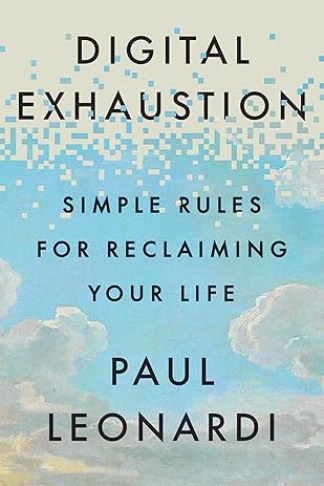
Paul Leonardi maps out an achievable path to reducing your digital exhaustion, drawing on extensive research to show how real people can use technology in healthy ways. These are realistic approaches that won’t fragment your attention and deplete your cognitive and emotional reserves. Many of the changes are simple yet surprisingly effective, like waiting longer to respond, making sure you’re using the right tool for your task, and being more conscious of the time and energy we allocate to our devices. He also explains the emotional traps that lead us into dysfunctional relationships with our technology, and how to escape them.
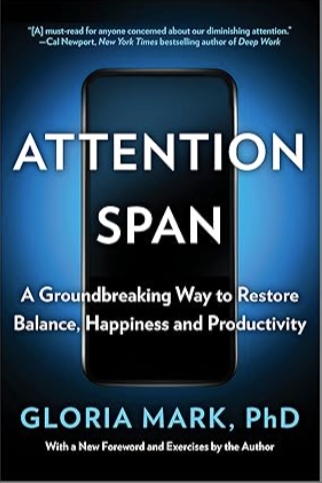
In Attention Span, psychologist Gloria Mark reveals these and more surprising results from her decades of research into how technology affects our attention. She shows how much of what we think we know is wrong, including insights such as: Why multitasking hurts rather than helps productivity; How social media and modern entertainment amplify our short attention spans; What drains our mental resources and how to refuel them; The four types of attention that we experience every day and how to recognize them
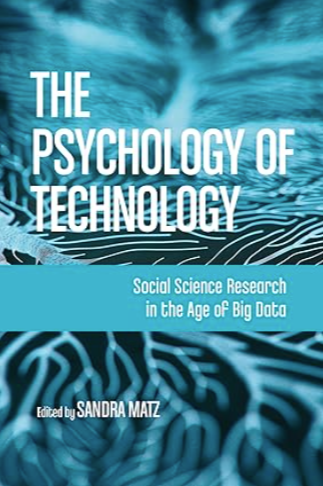
Rapid advances in information technology have profound implications for human interaction, mental health, and the field of psychology itself. This book examines research from different subdisciplines across psychology to address the ways in which technology and Big Data provide a unique window into human cognition and behavior. An especially timely book in light of the COVID-19 pandemic, when so many people were forced to live online like never before. Many of the changes, for individuals, workplaces, and societies, will be long-lasting.
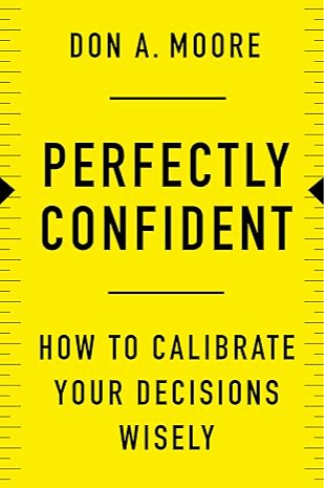
A surge of confidence can feel fantastic—offering a rush of energy, even a dazzling vision of the future. It can give us courage and bolster our determination when facing adversity. But if that self-assurance leads us to pursue impossible goals, it can waste time, money, and energy. Self-help books and motivational speakers tell us that the more confident we are, the better. But this way of thinking can lead to enormous trouble. Perfectly Confident is the first book to bring together the best psychological and economic studies to explain exactly what confidence is, when it can be helpful, and when it can be destructive in our lives.
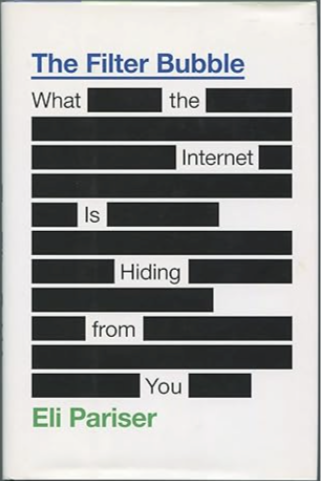
An eye-opening account of how the hidden rise of personalization on the Internet is controlling-and limiting-the information we consume. In December 2009, Google began customizing its search results for each user. Instead of giving you the most broadly popular result, Google now tries to predict what you are most likely to click on. According to MoveOn.org board president Eli Pariser, Google's change in policy is symptomatic of the most significant shift to take place on the Web in recent years-the rise of personalization. In this groundbreaking investigation of the new hidden Web, Pariser uncovers how this growing trend threatens to control how we consume and share information as a society-and reveals what we can do about it.
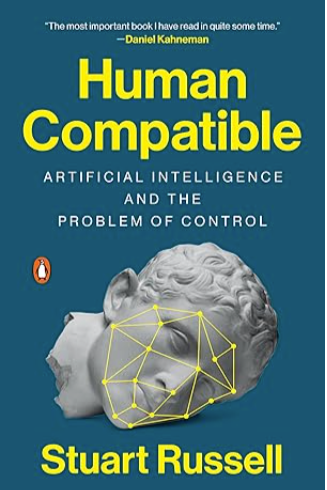
In this groundbreaking book, distinguished AI researcher Stuart Russell argues that this scenario can be avoided, but only if we rethink AI from the ground up. Russell begins by exploring the idea of intelligence in humans and in machines. He describes the near-term benefits we can expect, from intelligent personal assistants to vastly accelerated scientific research, and outlines the AI breakthroughs that still have to happen before we reach superhuman AI. He also spells out the ways humans are already finding to misuse AI, from lethal autonomous weapons to viral sabotage.
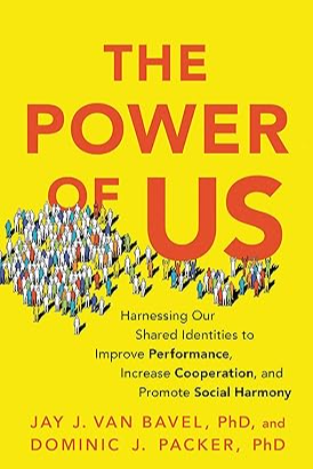
In The Power of Us, psychologists Dominic Packer and Jay Van Bavel integrate their own cutting-edge research in psychology and neuroscience to explain how identity really works and how to harness its dynamic nature to boost cooperation and productivity, overcome bias, escape from echo chambers, break political gridlock, foster dissent and mobilize for change, lead effectively, and galvanize action to address persistent global problems. Along the way, they explore such seemingly unrelated phenomena as why a small town in Germany spent decades divided by shoes, why beliefs persist after they are disproven, how working together synchronizes our brains, what makes selfish people generous, why effective leaders say “we” a lot, and how playing soccer can reduce age-old conflicts.
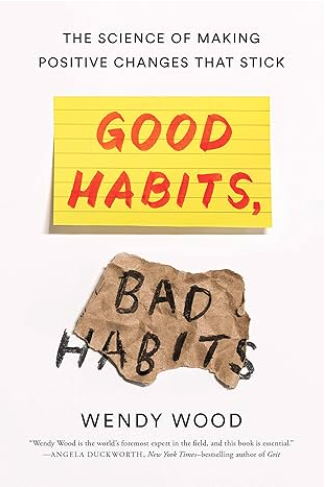
Wendy Wood draws on three decades of original research to explain the fascinating science of how we form habits, and offers the key to unlocking our habitual mind in order to make the changes we seek. A potent mix of neuroscience, case studies, and experiments conducted in her lab, Good Habits, Bad Habits is a comprehensive, accessible, and above all deeply practical book that will change the way you think about almost every aspect of your life. By explaining how our brains are wired to respond to rewards, receive cues from our surroundings, and shut down when faced with too much friction, Wood skillfully dissects habit formation, demonstrating how we can take advantage of this knowledge to form better habits.


Gazzaley and Rosen offer practical strategies, backed by science, to fight distraction. We can change our brains with meditation, video games, and physical exercise; we can change our behavior by planning our accessibility and recognizing our anxiety about being out of touch even briefly. They don't suggest that we give up our devices, but that we use them in a more balanced way.