2026 Speakers (draft 1)

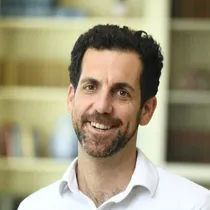
Kibum Moon

Kibum Moon is a Ph.D. candidate in Psychology at Georgetown University. His research explores human creativity and well-being in the context of AI and digital technologies. His recent work examines how generative AI makes individual work appear more creative while narrowing the diversity of human ideas. His broader goal is to understand the conditions under which AI and digital technologies can expand human creative potential and support digital well-being. To address these questions at scale, he integrates computational methods with psychological theory, combining natural language processing, machine learning, Bayesian modeling, and behavioral experiments. His work has been published in journals such as Nature Human Behaviour and featured in major media outlets, including The New York Times and CNN.

Read More
Parama SigurdsenComment
Don Norman

Don Norman is Distinguished Professor (emeritus), Founder and first Director of the Design Lab at the University of California, San Diego. He has been a Vice President of Advanced Technology at Apple and an executive at HP. He is co-founder of the Nielsen Norman group, a member of the National Academy of Engineering, fellow of numerous societies with honorary degrees from Delft, Padua, and San Marino. He received, a lifetime achievement award from ACM’s Computer-Human Interaction group, the President’s lifetime achievement award from the Human Factors and Ergonomics Society, the Sir Misha Black Medal for distinguished service to design education from the Royal Commission for the Exhibition of 1821, London, UK, the Design Guru Award from The Institute of Design, JK Lakshmipat University, Jaipur India. In 2022 he received the Frontier Design Prize from the World Design Cities Conference and the Design Innovation Institute, Shanghai with guidance from the Shanghai Municipal government. He is currently an Honorary Professor and Advisor, College of Design and Innovation, Tongji University (Shanghai) and on the International Advisory Board of the School of Design at Hong Kong Polytech and was a distinguished visiting professor at the Korean Advanced Institute of Technology for three years. He has published 21 books translated into over 20 languages including Emotional Design and Design of Everyday Things. His latest book is “Design for a Better World: Meaningful, Sustainable, Humanity Centered."

Read More
Parama SigurdsenComment
Pat Pataranutaporn

Pat Pataranutaporn, PhD is an assistant professor, technologist, and researcher at the Massachusetts Institute of Technology (MIT), where he is the founding director of the Cyborg Psychology research group. He also serves as co-director of the MIT Media Lab Advancing Humans with AI (AHA) Research Program. His research lies at the intersection of AI and human-computer interaction, where he focuses on inventing, investigating, and inspiring next-generation human-AI systems for human flourishing, applying insights from human psychology to AI and understanding how AI impacts human psychology. His research has been translated into real-world impact, ranging from Future You, a widely adopted AI digital twin for supporting long-term thinking that has been used in over 100 countries worldwide, to research that has shaped legislation protecting children from companion AI, and leading efforts to develop the first open benchmark for the human impact of AI in collaboration with leaders across academia, industry, and government. He also serves as an advisor to the Psychology of Technology Institute and Partnership on AI. As founding director of the Cyborg Psychology research group at the MIT Media Lab, he leads a team of interdisciplinary researchers to develop and study how AI can both augment and diminish human learning, decision-making, critical thinking, creativity, and other critical dimensions of human experience. His group is among the first to investigate emerging phenomena through empirical studies examining how AI reshapes cognition, emotion, and behavior, from emotional dependence on AI companions and cognitive manipulation to false memory implantation, placebo effects of human-AI interaction, and the co-evolution of human and machine intelligence. Pataranutaporn’s research contributions have been published in numerous peer-reviewed journals and conference proceedings, including ACM SIGCHI venues (CHI, IUI, DIS, ISWC, and AHs), ACM SIGGRAPH, NeurIPS, ICML, Proceedings of the National Academy of Sciences (PNAS), Nature Machine Intelligence, Nature Mental Health, Nature Biotechnology, Journal of the American Medical Association (JAMA), and New England Journal of Medicine (NEJM AI). His work has been highlighted by the United Nations AI for Good forum and featured in Technology Review, the New York Times, the Guardian, Bloomberg, the Washington Post, Forbes, the Atlantic, Scientific American, the Wall Street Journal, and more. His work has also been honored as one of TIME’s “Best Inventions of 2023” and was included in Fast Company’s “2023 World Changing Ideas.” Pataranutaporn has collaborated with researchers from both academia and industry, including teams from NASA, Stanford Medicine, Harvard, Mass General Brigham, UCSB, UCLA, UC Irvine, Microsoft Research, OpenAI, NTT Data, KBTG, and more. His projects have been exhibited at the MIT Museum (Massachusetts), Asia Pacific Triennial (Queensland Art Gallery, Australia), The Art Gallery of Western Australia (Australia), MAXXI: National Museum of 21st Century Art (Italy), Bangkok Art Biennale (Thailand), Bangkok City Gallery (Thailand), National Museum of Singapore (Singapore), Peabody Essex Museum (USA), London Design Festival (UK), Transmediale Festival (Germany), National Taiwan Science Education Center (Taiwan), IDEA Museum (Arizona), Mesa Arts Center (Arizona), Autodesk Gallery (California), SIGGRAPH Asia (Tokyo), Ars Electronica (Virtual), and more. Pataranutaporn co-designed and taught one of the first MIT courses on Generative AI, developed to equip students with the essential knowledge and skills to navigate the frontiers of this emerging field. He also co-organized the first workshop on virtual AI humans, attended by over 1,600 participants remotely and more than 200 in person in 2021. He also served as co-creator and writer of the Netflix sci-fi anthology series Tomorrow and I, which premiered in 2024.

Read More
Parama SigurdsenComment
Jenny Radesky

Dr. Radesky is the David G. Dickinson Legacy Professor of Pediatrics at the University of Michigan Medical School. Her NIH-funded research examines the use of mobile and interactive technology by parents and young children, parent-child relationships, and child social-emotional development. She has authored policy for the American Academy of Pediatrics (AAP), where she served as Chair of the Council on Communications and Media from 2023-2025. Since 2022 she has acted as co-Medical Director of the AAP Center of Excellence on Social Media and Youth Mental Health, which aims to translate research evidence into family-centered guidance. Dr. Radesky led the first Behavioral Team at the U.S. Federal Trade Commission in 2024-2025, supporting teams on cases related youth online harms. She currently serves as a Senior Advisor to the Common Sense Media Youth AI Safety Institute and has a forthcoming book Connecting: Raising Kids in a Digital World.

Read More
Parama SigurdsenComment
Rahmin Sarabi

Rahmin Sarabi is Co-Founder and Co-Executive Director of BLOOM, a civic deliberation and organizing initiative that builds open-source tools and convenes citizen assemblies on how communities should govern AI and other shared challenges. His work is driven by a single mission: upgrading how we do democracy so that it empowers the problem-solving and agency of everyday Americans to tackle major challenges, bridge divides, and create better futures. He is a social entrepreneur, human-centered designer, and strategist with more than 20 years across social benefit startups and nonprofit organizations. BLOOMs current work includes a federated network of local civic hosts running assemblies across the U.S., open-source deliberation infrastructure (CivicOS), and pilots with partners in Utah and Central Oregon. His earlier work in deliberative democracy includes Engaged California, the City of Fort Collins first-ever Civic Assembly (whose recommendations were later approved by ballot initiative), the Michigan Citizens Panel on COVID-19, the Petaluma Fairgrounds Advisory Panel, and a novel integration of mini-publics with digital deliberative tools for the State of Colorado. He also contributes to field building, having co-founded the Assemble the Field effort in the U.S. and led strategic planning for the international Democracy Ramp;D network. Rahmin has spoken on democratic innovations to audiences organized by Stanford, MIT, TED, KQED, the Berggruen Institute, and the International Association of Public Participation Professionals. He is a board member of the Co-Intelligence Institute. His roles have spanned early-stage discovery, design research, product management, people operations leadership, and strategic facilitation.

Read More
Parama SigurdsenComment
Barry Schwartz

Barry Schwartz is an emeritus professor of psychology at Swarthmore College and a research associate at the Haas School of Business at Berkeley. He has spent more than fifty years thinking and writing about the interaction between economics, psychology, and morality. He has written several books that address aspects of this interaction, including The Battle for Human Nature, The Costs of Living, The Paradox of Choice, Practical Wisdom (with Kenneth Sharpe), Why We Work, and most recently, Choose Wisely (with Richard Schuldenfrei). Schwartz has spoken four times at the TED conference, and his TED talks have been viewed by more than 25 million people.

Read More
Parama SigurdsenComment
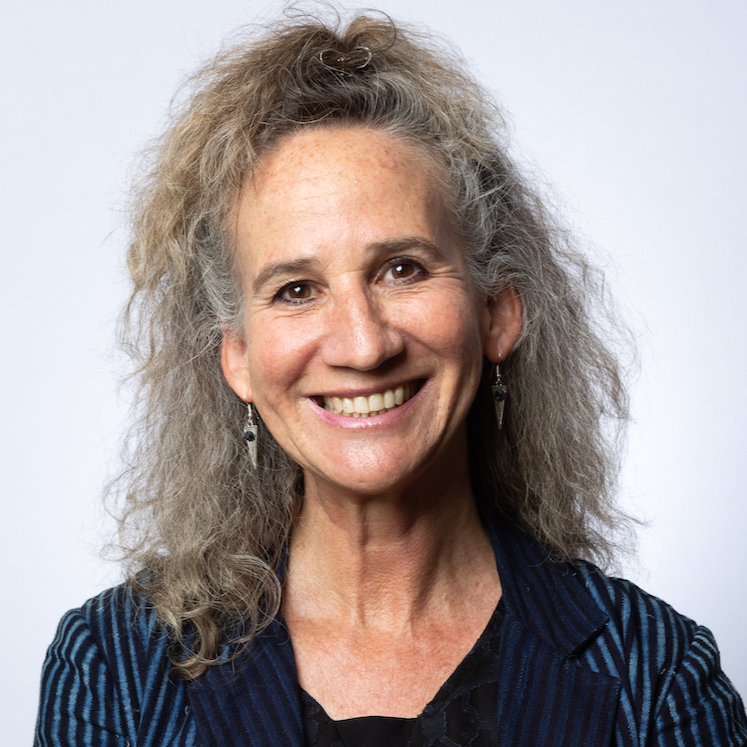
Lena Slachmuijlder

Lena Slachmuijlder has worked at the intersection of media, peacebuilding, and technology for more than three decades. She spent a decade with independent media in Africa before leading two decades of peacebuilding initiatives across Africa, Asia, and the Middle East with Search for Common Ground, where she advanced dialogue, trust, and inclusive participation in conflict-affected societies. Since 2023, she has served as Co-Chair of the Council on Tech and Social Cohesion, co-founded by Search, where she helps guide a global network dedicated to steering technology toward social cohesion rather than polarization and violence. Her work amplifies design-focused approaches in regulatory efforts and explores the adoption of AI-enabled deliberative technologies to support human coordination and decision making. Lena is a graduate of Stanford University and the THNK School of Creative Leadership, and she continues to advance ways that emerging technologies can strengthen democratic resilience and healthier communities worldwide.

Read More
Parama SigurdsenComment
Ertuğrul Uysal

Ertugrul Uysal is an Assistant Professor of Digital Marketing at ZHAW School of Management and Law and a senior researcher at ETH Zürich. His research focuses on how we interact with and relate to digital technologies (GenAI, social media, virtual reality, voice technologies). He often thinks about how we can achieve a sustainable digital future. He is interested in the intersection of AI and empathy, working on GenAI-powered voice technologies with emotion recognition capabilities at the AI Empathy Lab in Switzerland.

Read More
Parama SigurdsenComment
Xuan Zhao

Xuan Zhao, PhD, is the Co-Founder and CEO of Flourish Science and a behavioral scientist at Stanford University. Her work spans psychology, behavioral science, human-robot interaction, and AI, with a particular focus on how technology can strengthen mental health, social connection, and human flourishing. Xuan is a leading voice in evidence-based and responsible AI for mental health. At Flourish, she leads the development of safety-first AI systems designed to provide proactive, continuous mental health support while strengthening—not replacing—human relationships and professional care. She has helped pioneer a rigorous approach to evaluating mental health AI through large-scale randomized controlled trials and clinician-supervised safety systems. Xuan earned her PhD in Psychology from Brown University, where her research included social cognition and human-robot interaction, and completed postdoctoral training at the University of Chicago Booth School of Business studying conversation and social connection. She later conducted research at Stanford, translating behavioral science into real-world interventions and technology. Her research has been published in leading academic journals and featured in outlets including The New York Times, Harvard Business Review, BBC, and NPR. She now works at the intersection of science, technology, entrepreneurship, and mental health to establish a higher standard for how AI can safely and effectively support human well-being.

Read More
Parama SigurdsenComment