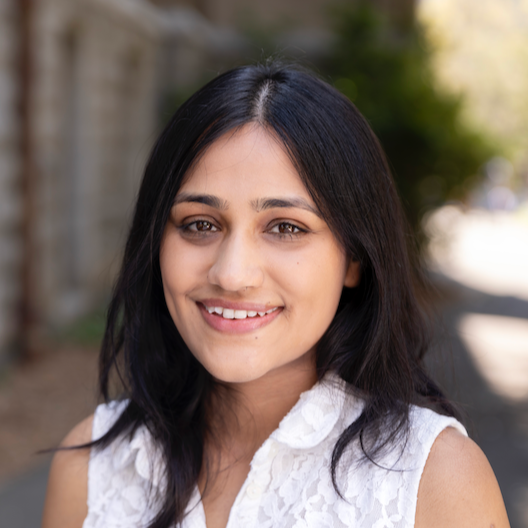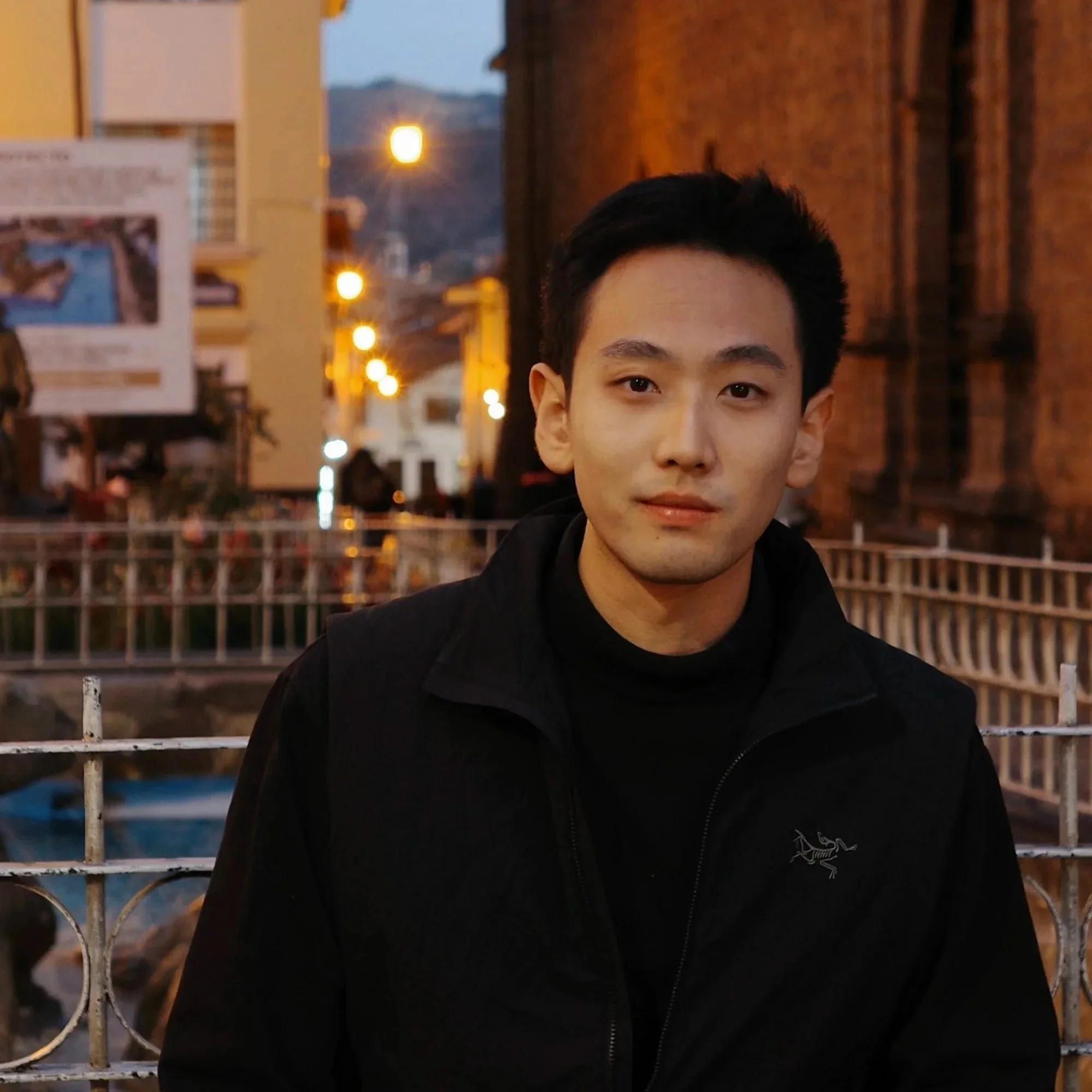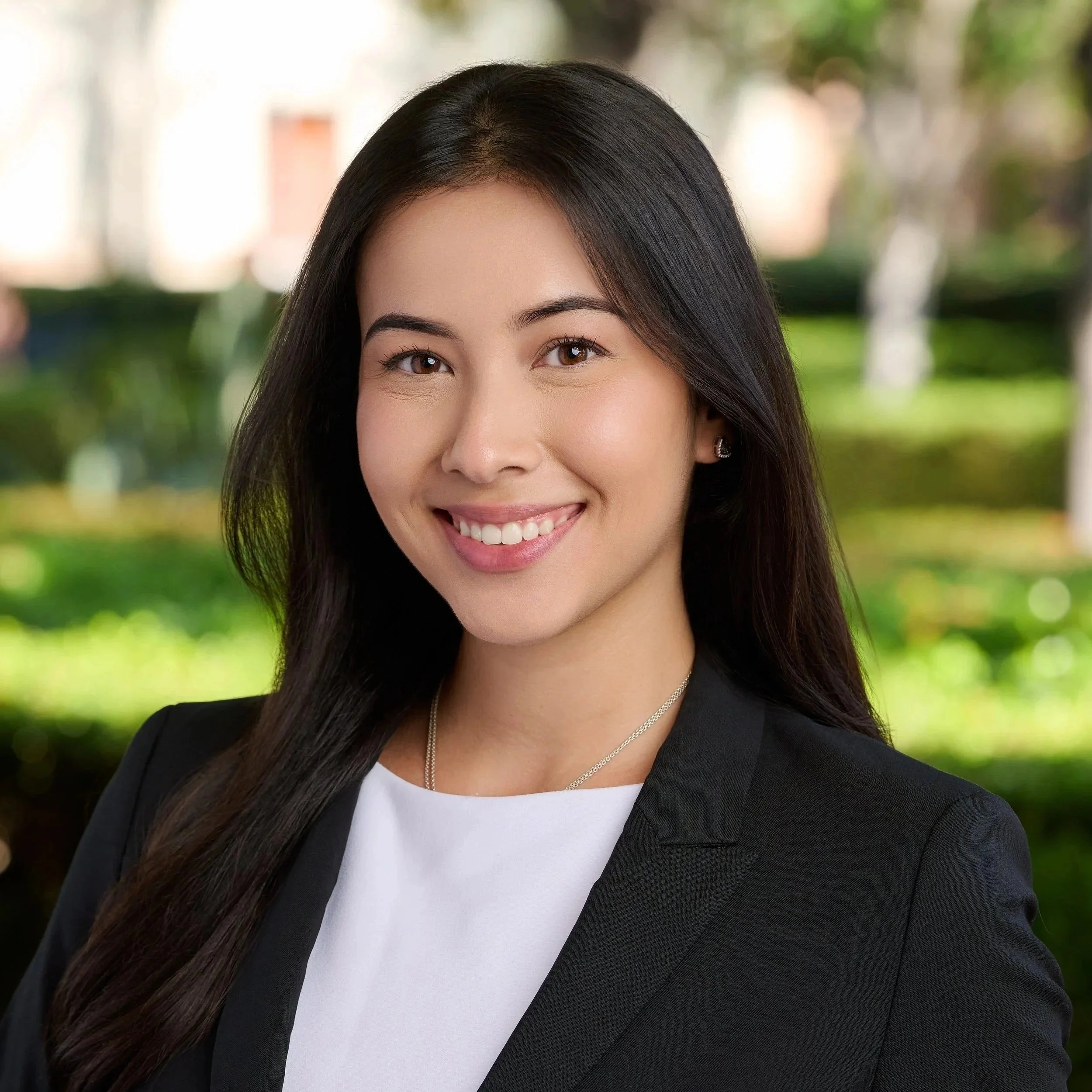
Jeslyn Brouwers is a PhD student in Management and Organization at the USC Marshall School of Business.
Read More
Jeslyn Brouwers is a PhD student in Management and Organization at the USC Marshall School of Business.
Read MoreElizabeth is a PhD student in the Life Hacks Research Lab. She holds a B.S. in psychology from the University of Toronto. She is interested in the links between screen time and well-being and designing interventions to improve people's experiences using technology. Outside of the lab, she enjoys watching basketball, doing jigsaw puzzles, and spending time with her bunny.
Read MoreVivienne Chi is a Postdoctoral Researcher in Computer and Information Science at the University of Pennsylvania. She studies how people's relationships with AI develop over time: how people learn to trust AI, how it shapes their choices and sense of agency, and what those interactions mean for well-being. Combining cognitive science with computational methods, her work aims to inform the design of AI systems that support people’s longer-term interests.
Read MoreYalda Daryani is a PhD candidate in social psychology at the University of Southern California, where she works in the Mind & Society Center with Daphna Oyserman and Norbert Schwarz. She studies how AI systems represent human culture and values, using natural language processing, cross-cultural studies, and behavioral experiments. Her recent work examines how large language models flatten cultural differences, whether frontier models capture how national cultures change over time, and how LLMs reason about moral content across languages. In 2026, she was a Google Public Policy Fellow at the Center for Democracy & Technology.
Read MoreDanica Dillion is a Postdoctoral Researcher at Complexity Science Hub Vienna and The Ohio State University, where she studies how AI systems model human moral values and how they can be better aligned with people. Her research spans the growing role of large language models (LLMs) in moral advice and decision-making, the potential for LLMs to simulate human research participants, variation in moral beliefs across social network structures, and the relationships between religious beliefs and social scale across historical societies. She has also co-authored a benchmark for multicultural value alignment in LLMs. Her work has been published in journals such as Nature Human Behaviour, PNAS Nexus, and Trends in Cognitive Sciences, and featured in media outlets such as The New Yorker and Scientific American.
Read MoreLila DiMasi is a research coordinator working with Angela Duckworth and the Behavior Change for Good Initiative at the University of Pennsylvania. She received her B.A. in Psychology from Penn. She is interested in social connection and how technology use affects how we engage with the people around us.
Read MoreGrace Falgoust (she/her) is a doctoral candidate in Social Psychology and a master's candidate in Public Policy at Georgetown University, where she is advised by Dr. Kostadin Kushlev in the Happy Tech Lab. Her research examines how technology shapes wellbeing and translates that science into actionable policy recommendations for schools, governments, and workplaces—drawing on both quantitative and qualitative methods to do so. Currently, she co-leads a research project investigating the real-world impacts of social media regulation on youth wellbeing. Before graduate school, she spent two years at the RAND Corporation contributing to peer-reviewed publications and research reports across defense, public health, and education policy. Outside of the lab, you can find her on DC's biking trails or watercoloring cards.
Read MoreEvan Gold is an undergraduate at the University of California, Berkeley, pursuing a B.A. degree in Integrative Biology (Class of 2027). He is a co-lead teaching and research assistant for CogSci 175, Mind, Machine, and Meaning. Additionally he has taught the student-led course Info 98: Becoming Tech Intentional. His research interest is how young people can learn to have healthier relationships with technology and he hopes to pursue graduate study in the area. He is also an oarsman for the Cal men's rowing team.
Read MoreBethany is a fourth-year PhD student in the Wharton Operations, Information, & Decisions department. She is also part of the Computational Social Science Lab and advised by Professor Duncan Watts. Her research focuses on AI and its impact on human decision-making. Before joining the PhD program, Bethany earned a B.S.E. in Computer & Information Science from the University of Pennsylvania.
Read MoreDanielle Leibzon is an undergraduate at the University of California, Berkeley, pursuing B.A. degrees in Molecular & Cell Biology and Public Health (Class of 2028). She is a Co-Lead Student Facilitator for Dr. Sahar Yousef's Cognitive Science 175 course, "Mind, Machine, and Meaning: Living Intentionally in the Digital Age," where she co-leads a team of 10 facilitators supporting 450 students. Her research with the course team examines how limiting screen time and practicing mindfulness affect digital dependence, attention, and social interaction.
Read MoreGracielle Li is a Ph.D. candidate in Psychology and Social Policy at Princeton University. Her research examines how people form expectations, beliefs, and social connections across interpersonal, parasocial, and human–AI relationships. More broadly, she studies how people come to trust, understand, and feel connected to social figures and technologies, and how these relationships shape social cognition and behavior.
Read MoreDr. Jennifer Sparks Taylor serves as the Director of Corporate Relations & Executive Education at the Center for Effective Organizations (CEO) within the Marshall School of Business at the University of Southern California. In her role, Jennifer co-leads the Center, collaborating closely with CEO’s sponsors, clients, and research scientists to develop impactful solutions and programs aimed at enhancing organizational effectiveness. Jennifer’s career spans over 30 years with a primary focus on marketing, branding, and customer relationship management. She has extensive experience working with leading consumer brands across a variety of industries, including automotive, consumer products, education, entertainment, healthcare, hospitality, oil and gas, retail, sports, and travel. Jennifer brings a unique perspective to organizations through a brand strategy and a customer-centric lens. Drawing from her deep industry knowledge, Jennifer recognizes the crucial intersection between research and practice in fostering organizational effectiveness and sustainable business practices. Her research is focused on the importance of structured reflection and responsible leadership in effectively leading global teams. From her doctoral research at USC, she launched The Human Loop: Leading with Reflection in the Age of AI, a book, toolset, and research initiative to explore the development of responsible leadership capabilities through a structured reflection process. Jennifer earned her B.S. in Business Administration with emphases in Marketing, Finance, and Entrepreneurship from the USC Marshall School of Business. She furthered her education by obtaining a Doctorate in Education (EdD) from the USC Rossier School of Education, specializing in Organizational Change & Leadership.
Read MoreGowri Swamy is a PhD student in the School of Information at UC Berkeley. She received her bachelor’s degree in Cognitive Science and Psychology and master’s degree in Information Management and Systems, both from UC Berkeley. Her research uses empirical methods to understand how we may consider the development of prosocial behaviors in the design of digital social platforms. In the work she is presenting, she investigates how opportunities for self-disclosure in dyadic online interactions lead to the cultivation and display of cooperation, trust, and reciprocity. Findings from her study may be applied as design interventions to nurture prosociality on social gaming platforms and expand theoretical understandings on interpersonal communication to create stronger digital social environments.
Read MoreTanya is a Ph.D. candidate in Social and Personality Psychology and a member of the Positive Activities and Well-Being Lab at the University of California, Riverside. Her research examines positive psychological interventions, individual differences, and the role of emerging technologies in supporting well-being. Her dissertation tests whether AI-facilitated gratitude journaling can support well-being by helping people reflect, express appreciation, and engage with gratitude practices in ways that feel meaningful and personally fitting. Prior to graduate school, Tanya worked for 16 years in marketing and market research, including as Associate Director of Marketing for the Sundance Institute and Sundance Film Festival, where she led data-informed marketing, fundraising, and customer experience research. She also worked as a senior consultant on quantitative and qualitative research for organizations including Microsoft, Disney, Red Bull, Nike, Apple, and Starbucks.
Read MoreHongkun Zhang is a Ph.D. student at the USC Marshall School of Business, advised by Professor Nathanael Fast. His research explores how individuals and organizations adopt and adapt to AI technologies, with a particular focus on organizational dynamics under the influence of AI. He is also interested in the methodological implications of using large language models (LLMs) in social science research—examining their efficiency, reliability, and appropriate applications compared to human raters, particularly in the context of analyzing cultural dynamics.
Read More